I'm getting ready to start another 30-day "The OS is Dead" trial in honor of the first look at ChromeOS (of course I'll do it with Chromium), and that means that I need to get Chromium in shape for the trip, which it's not by default. For my purposes, that means installing the following extensions:
Adblock+: You'll need to make sure that Chromium is fully updated for this one to work.
Facebook Enhancer: This extension pins the FB menu bar and side panel during scrolling.
Gmail Checker: This does the same for GMail instead of FB.
Google Bookmarks: This gives access to Google Bookmarks via a button.
Google Tasks: This creates a (hidden) task window on every page visited.
Jamendo Radio: This extension puts Jamendo at your fingertips. Unfortunately, it didn't work as installed and the links needed tweaking in the options.
Since I used the ZemantaFirefox plug-in for blogging, I needed to find something similar for Chrome. Zemanta's not the greatest, but it works with a feature set comparable to off-line clients. Luckily, Zemanta has a bookmarklet which causes the controls to load on supported pages. The system isn't automatic, but in my case, that's actually better since I can compose the whole post and load the components at the end, saving refreshing.
That's all I've done so far. I still need to find a video plug-in, I guess
Who's winning the new browser wars? We are. By "we," I mean consumers.
Just look at the stuff that has happened in the last couple of years. We've got a mature Safari, based on WebKit and the Squirrelfish engine, running just about as fast as any browser. Chrome is also based on WebKit but uses a completely new JavaScript engine named V8, and it blows the doors off of just about everything else. Firefox has hit 3.0 and now 3.5, with improved Gecko rendering and Spidermonkey / Tracemonkey keeping the browser competitive and all the extensions keeping it attractive to large numbers of users. Even IE has bumped up a couple of versions to 7 then 8, and there's no reason to call it a pig, either. (Oops, I forgot Opera Unite!)
Just imagine what we would have had in 2004 if IE hadn't won the original browser wars and sat at version 6 and 95% of web traffic for five years.
Chrome OS will basically be the Linux kernel, a new windowing system (which I assumes means something other than Xorg, and not just a window manager), and Chrome. There will be no other applications. ("There is only Zuul.") All applications will be web apps. It will run on ARM and x86.
However, the operating systems that browsers run on were designed in an era where there was no web. So today, we're announcing a new project that's a natural extension of Google Chrome — the Google Chrome Operating System. It's our attempt to re-think what operating systems should be.
Moblin emphasizes on-line possibilities, too, but has many more local applications to connect with.
UNR sits slightly above Mobin, with a standard operating system and an innovative interface.
And then there's Windows 7, which will "run" in 1GB, but sertainly won't be a speed demon. Even though MS dropped the hard three-application limit, you'll still be limited to somewhere near that number by RAM requirements.
I predict those levels are basically how the market will break out, too. The ultra-cheap netbooks based on ARM and intended solely for surfing will get Chrome OS; Moblin and UNR will take the low-end of the marke; and Win7 will get the top 50-70%.
The repository system is a great strength of open-source operating systems, but some people want the latest-and-greatest of a particular application while keeping the core system unchanged. There is also the situation where non-free applications aren't available from within the standard repositories. In these two cases, adding outside repos can help you get the functionality you want. I've done some homework for you and here are the "Extra Repositories for Ubuntu 8.10 You Might Want." Simply open up System > Administration > Software Sources and add the repository lines listed below as a third-party repository.
Here are your repositories!
Medibuntu
Medibuntu is the best way to get some video and audio playback capability that isn't included in Ubuntu 8.10 for patent reasons. If you live in a regioon which doesn't support these patents, you can go ahead and get them. Popular packages include:
Acrobat Reader
Firmware for the ALSA sound system
Google Earth
DVD decryption
MPlayer / MEncoder
Non-free codecs and
Skype
Add this line to Software Sources:
deb http://packages.medibuntu.org/ intrepid free non-free
When you are finished, install the medibuntu-keyring and app-install-data-medibuntu packages.
Wine
Ubuntu 8.10 ships with Wine 1.0, but the development version is able to run many more Windows programs. You can get the latest version from the Wine repository.
Add this line to Software Sources:
deb http://wine.budgetdedicated.com/apt intrepid main
When you are finished, install the wine package.
OO.o3
OpenOffice.org 3.0 just missed the cut-off for Intrepid. If you want the additional functionality of 3.0, you'll need to add the PPA for the OO.o team.
Add this line to Software Sources:
deb http://ppa.launchpad.net/openoffice-pkgs/ubuntu intrepid main
When you are finished, upgrade and everything should be fine.
Opera
While Firefox is a great browser, some people just prefer Opera. Opera makes it easy for Debian-based OSes.
Add this line to Software Sources: deb http://deb.opera.com/opera/ stable non-free When you are finished, install the opera package. Google Chrome Google's browser isn't yet available on non-Windows systems, but you can get an automated daily build of Chromium to test. It's not guaranteed to work on any particular day. This is native, not the Crossover Wine version that's been out since as remains at the 0.9 beta version.
Add this line to Software Sources: deb http://ppa.launchpad.net/chromium-daily/ppa/ubuntu intrepid main When you are finished, install the chromium-browser package.
Banshee
Banshee is an audio and video manager which is seeinging extremely rapid development. New features are added every month.
Add this line to Software Sources:
deb http://ppa.launchpad.net/banshee-team/ubuntu intrepid main
When you are finished, install the banshee package.
VideoLAN Client (VLC)
While I prefer Totem, many people, especially those recently from Windows, prefer the media player they've known and loved for years. VLC is in the repositories, but keeping up with recent versions means adding this line to Software Sources:
deb http://ppa.launchpad.net/c-korn/ubuntu intrepid main
When you are finished, just install the vlc package. You can also get apt-cacher-ng from this repo.
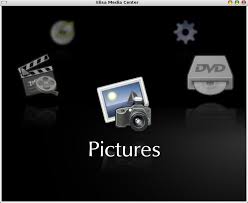
Boxee
Boxee is an amazing media center (derived from XMBC) that runs on OS X and Linux, and it does just about everything you could imagine. Right now, it's alpha, and you'll have to sign up on the Boxee registration page in order to use the software.
Add this line to Software Sources:
deb http://apt.boxee.tv intrepid main
When you are finished, just install the boxee package.
Elisa
If you don't need all the craziness of Boxee and just want a simple media center, take a look at Fluendo's Elisa. It uses GStreamer, already the default A/V decoder on Ubuntu, so it won't add a lot of weight to your installation.
Add this line to Software Sources:
deb http://ppa.launchpad.net/elisa-developers/ppa/ubuntu intrepid main
When you are finished, install the elisa package and update your computer.
Netbook Remix
One of the most innovative things to come out of the Ubuntu camp is the neetbook remix interface. Want to try it out?
Add this line to Software Sources:
deb http://ppa.launchpad.net/netbook-remix-team/ubuntu intrepid main
Then follow the detailed instructions on how to get it running.
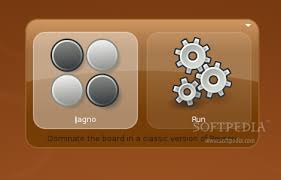
Gnome Do
This launcher amazes everyone who tries it. These days, it even comes with an optional dock. Although I don't use it daily, I think everyone should give it a shot.
Add this line to Software Sources:
deb http://ppa.launchpad.net/do-core/ppa/ubuntu intrepid main
When you are finished, install the gnome-do package.
Deluge
Intrepid comes with the Transmission BitTorrent client installed, and Tranmission is fine, but Deluge is a full-featured client which rivals and may now beat the Azureus cum Vuze client that so many people swore by for years. As a bonus, Deluge is a GTK2 application, so it doesn't use up 50% of your CPU while running several torrents. Deluge has a wide-array of features, including:
Web UI
BitTorrent Protocol Encryption
Mainline DHT
Local Peer Discovery (aka LSD)
FAST protocol extension
µTorrent Peer Exchange
UPnP and NAT-PMP
Proxy support
Private Torrents
Global and per-torrent speed limits
Password protection
Add this line to Software Sources:
deb http://ppa.launchpad.net/deluge-team/ubuntu intrepid main
When you are finished, install the deluge package.
Google Gadget
Google used to host a repo itself, but that went away and we are just left with a PPA for Google Gadgets. It's for Hardy (8.04), but there doesn't appear to be a problem with running it on Intrepid. Caveat emptor.
Add this line to Software Sources:
deb http://ppa.launchpad.net/googlegadgets/ppa/ubuntu hardy main
When you are finished, install the google-gadgets package.
Mythbuntu
If you installed Mythbuntu and want to keep up with the latest release of MythTV, including all kinds of extra plug-ins:
mytharchive create and burn DVD's from MythTV - binary file
mytharchive-data create and burn DVD's from MythTV - data files
mythcontrols External controls for MythTV
mythflix netflix module for MythTV
mythgallery Image gallery/slideshow add-on module for MythTV
mythgame Emulator & PC Game frontend module for MythTV
mythmovies Find nearby movies and cinema listings
mythmusic Music add-on module for MythTV
mythnews An RSS feed news reader module for MythTV
mythphone a phone and videophone module for MythTV
mythplugins Metapackage for MythTV plugins
mythvideo A generic video player frontend module for MythTV
mythweather Weather add-on module for MythTV
mythweb Web interface add-on module for MythTV
mythzoneminder view status and display footage recorded with zoneminder
Add this line to Software Sources:
deb http://ppa.launchpad.net/mythbuntu/ubuntu intrepid main
When you are finished, update your installation.
Compiz
Compiz Fusion comes standard on Ubuntu, but you might want to keep up with the mosst current version to have all that extra BLING.
Add this line to Software Sources:
deb http://ppa.launchpad.net/compiz/ubuntu intrepid main
When you are finished, update your installation.
Miro
"Miro is a free HD video player." Somehow, the website's description falls so short that I don't know how Miro is as successful as it is. They must be going understated. It aggregates a browser, an RSS reader, a bittorent client, and a video player. Want TV on your computer? Get miro.
Add this line to Software Sources:
deb http://ftp.osuosl.org/pub/pculture.org/miro/linux/repositories/ubuntu intrepid/
When you are finished, install the miro package.
Shutter
Vadi recommends Shutter (recently renamed from GScrot), an extremely capable screenshot tool. Features include:
take a screenshot of your complete desktop, a rectangular area or capture a website
take screenshot directly or with a specified delay time
save the screenshots to a specified directory and name them in a convenient way (using special wild-cards)
Shutter is fully integrated into the Gnome Desktop (TrayIcon etc.)
generate thumbnails directly when you are taking a screenshot and set a size level in %
Shutter session collection
keep track of all screenshots during session
copy screeners to clipboard
print screenshots
delete screenshots
rename your file
upload your files directly to Image-Hosters (e.g. http://ubuntu-pics.de), retrieve all the needed links and share them with others
edit your screenshots directly using the embedded drawing tool.
Commenters recommend AppSpot and the Ubuntu PPA search to find repositories for applications you may need. AppSpot even has a grouping of recent searches to spur your imagination.
Keys
You'll have some package manager complaints about keys if you're not careful. Import these keys to get rid of the warnings. Allaun recommends using the NO_PUBKEY value (e.g. C5E6A5ED249AD24C) to add the key with the following command.
If you use the manual method, open 1) a browser 2) a text editor 3) Software Sources Open the page from the http: lines listed below, then copy the part of the displayed text which begins at " -----BEGIN PGP PUBLIC KEY BLOCK-----" and ends at " -----END PGP PUBLIC KEY BLOCK-----" Paste that into your text editor and save it as delugekey.gpg or something similar. Then use Software Sources to import the saved key file in the "Authentication" tab.


![Reblog this post [with Zemanta]](https://lh3.googleusercontent.com/blogger_img_proxy/AEn0k_uvovxuvxXr_GgMZTF61mlEFdDkQaT4Yd3h7jR2Uy1PdbWt7V9Lah4gWHFQYSKv490u4eyebqy-dYme7vuhXTA2oqVX6jlTa7wbq2Ud6fuUJ7lETupsrGT_CKI8URgjiL256KVmvNqgzjHPFrWaUCQ=s0-d)


![Reblog this post [with Zemanta]](https://lh3.googleusercontent.com/blogger_img_proxy/AEn0k_uDJTL5ixiWsP1bAgWz30bl1-Us7J42DqIth2gIeoPrv_vtnqVhhlwA6WDlyRDvACFWsC4QxCxAlDxgq_LFygaj_5agZlXV-BQd6UIuKTdjKg5A1iBM128DL5VE_fOAp_0D1DBL4yInSgKxYJyxm64R=s0-d)

![Reblog this post [with Zemanta]](https://lh3.googleusercontent.com/blogger_img_proxy/AEn0k_tV721DdZtf6VXg_lisPR1mFQVsPA8oxf-K4Lk9zpegk_yMkFlXw7EZeUUvDG530CM5g-cmzqh1d1blyvISq70Pl-80KtqLFIpGDSEgf7T1qD_oxaf2CJpI32EogKMEonJmlEDn87r4uGz-VmLoJYk=s0-d)














![Reblog this post [with Zemanta]](https://lh3.googleusercontent.com/blogger_img_proxy/AEn0k_tOevROKwT1EjQsPC3ReHQHlhsa6sgcjMnYLhr6xaqhSWZd8AclRYQ1Y0wJ-f_MjvrsC90_2kwrclMnnrqzCdNBmoRHY-o4RQatqPzL1PzgN3g5rCoj17FlGDEeZntdUJM2x9OOMq1n3qYN7AsB6KQ=s0-d)

